About Emergency Management
The Four Phases of Emergency Management
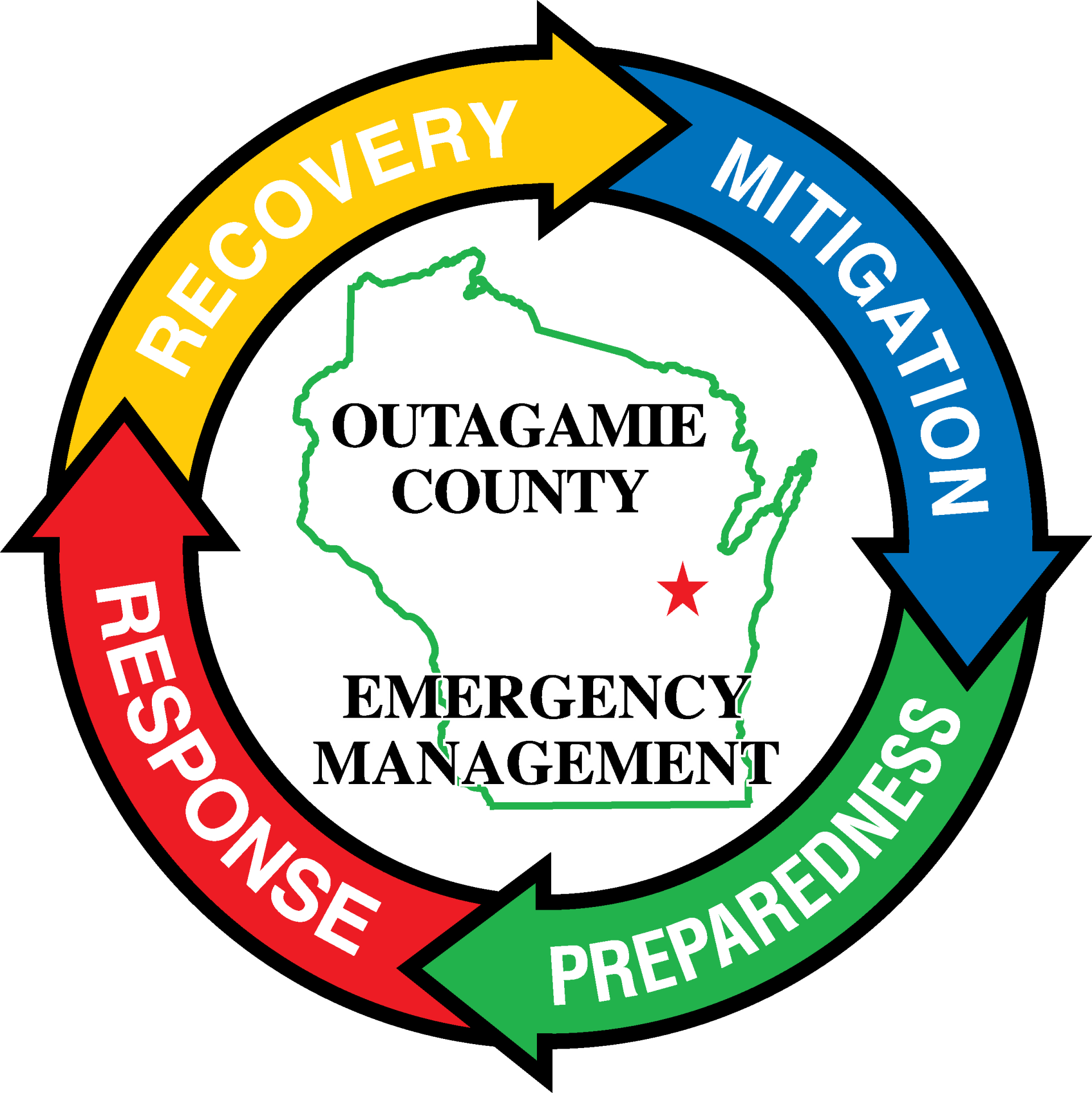
"Preparedness" means getting ready before a disaster happens. The goal is to identify problems early and plan how to fix them so the disaster causes less harm. Preparedness includes three elements:
- The development of emergency response plans
- Training and exercising
- Public education about our hazards and how to prepare and respond to them
"Response" means helping people right after a disaster. There are three goals during the response phase:
- Save lives and reduce further injuries
- Preserve property
- Protect the environment
"Recovery" is the process of getting things back to normal after a disaster. This can include replacing a washed out bridge or long term cleanup after a storm. Some activities are quickly accomplished, like adding gravel to washed out roads. While other activities, like rebuilding a community, can take years.
"Mitigation" means taking steps to prevent disasters or make them less harmful. These activities usually happen before or right after a disaster. The goal of mitigation is to stop disasters from happening or reduce their impact. Examples of mitigation projects:
- Installing outdoor warning sirens
- Making rules about where people can build to avoid floods
- Creating building codes that require storm shelters